Key takeaways
- Cleaning removes dirt. Disinfecting kills germs on a surface that has already been cleaned.
- Disinfectants must stay wet on the surface for the contact time on the label.
- Never mix cleaning products, especially bleach with ammonia or acids.
- Focus on high-touch surfaces rather than disinfecting everything.
Three different jobs
Cleaning uses soap or detergent and friction to remove dirt, dust and grease. Sanitizing reduces the number of germs to a level considered safe. Disinfecting uses a registered product to kill germs on a surface.
Each has a place, and a clean surface is the starting point for the other two.
Clean first, then disinfect
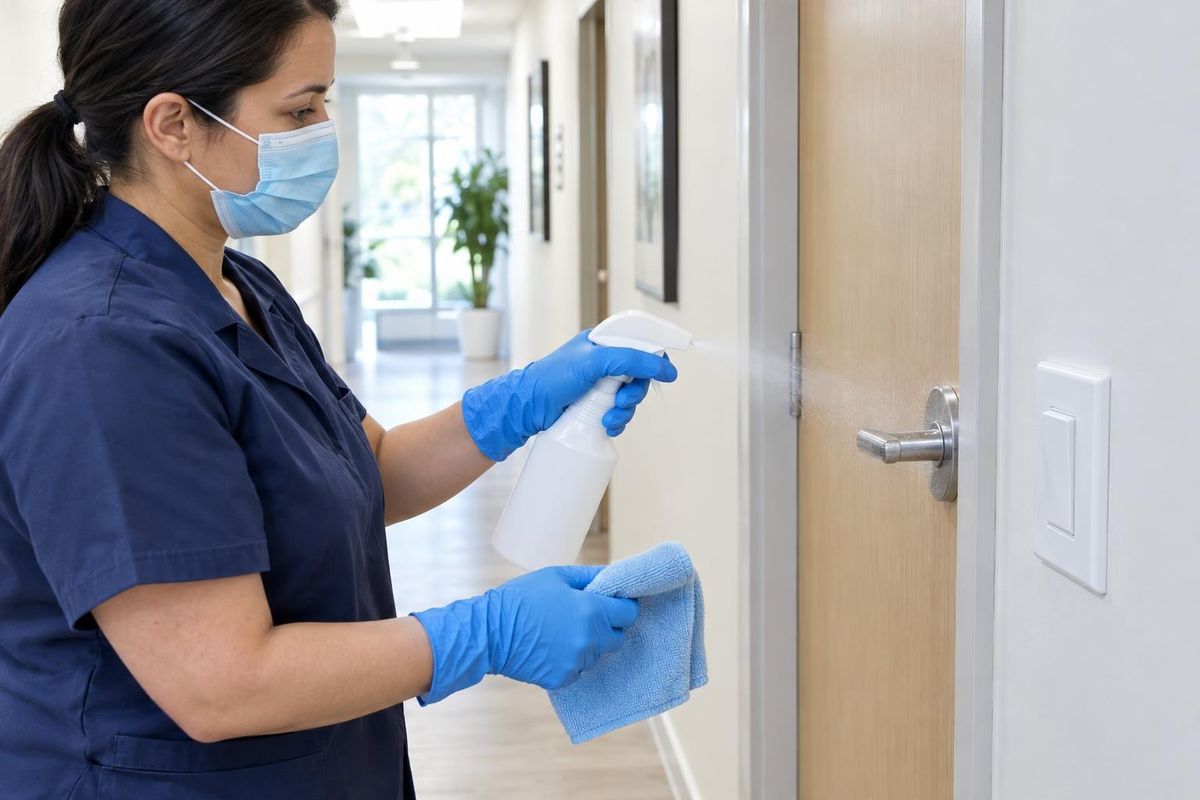
Dirt and grease shield germs and use up disinfectant, so the surface should be cleaned first. After cleaning, apply the disinfectant and keep the surface wet for the contact time on the label. That time is often several minutes, and wiping it off sooner can mean it does not work as intended.
Use products only as the label directs, and keep them away from children and pets.
Where to focus
The surfaces that matter most are the ones many hands touch: door handles, light switches, railings, faucets, remotes, phones, counters and restroom fixtures. Disinfecting every surface in a home is rarely necessary, and focusing on these gets most of the benefit.
After illness in the home, pay extra attention to bathrooms and shared items.
Safety
Ventilate when using strong products, wear gloves if the label says so and never combine products. Mixing bleach with ammonia or acids can create toxic gases. If a mistake happens or a child or pet gets into a product, call Poison Control.
The EPA keeps lists of registered disinfectants for homes and businesses.
Official sites to explore
Brand names and logos belong to their owners. These links open the official websites in a new tab, and we are not affiliated with them.
- U.S. EPA: Selected EPA-Registered DisinfectantsLists of registered disinfectant products and how to use them correctly.
- Poison ControlFree, expert help for poisoning emergencies and questions about household chemicals.
- U.S. EPA: Indoor Air QualityFederal information on the sources of indoor air pollution and how to reduce them.
- U.S. EPA: Safer ChoiceInformation on cleaning products that meet a federal standard for safer ingredients.
Quick answers
Is disinfecting needed every day?
Not usually. Regular cleaning handles most of the work, and disinfecting is useful for high-touch surfaces and after illness.
Can I mix two cleaners for more power?
No. Mixing products can create dangerous gases and is not recommended.
How long should the disinfectant stay wet?
As long as the product label says. Check the contact time.